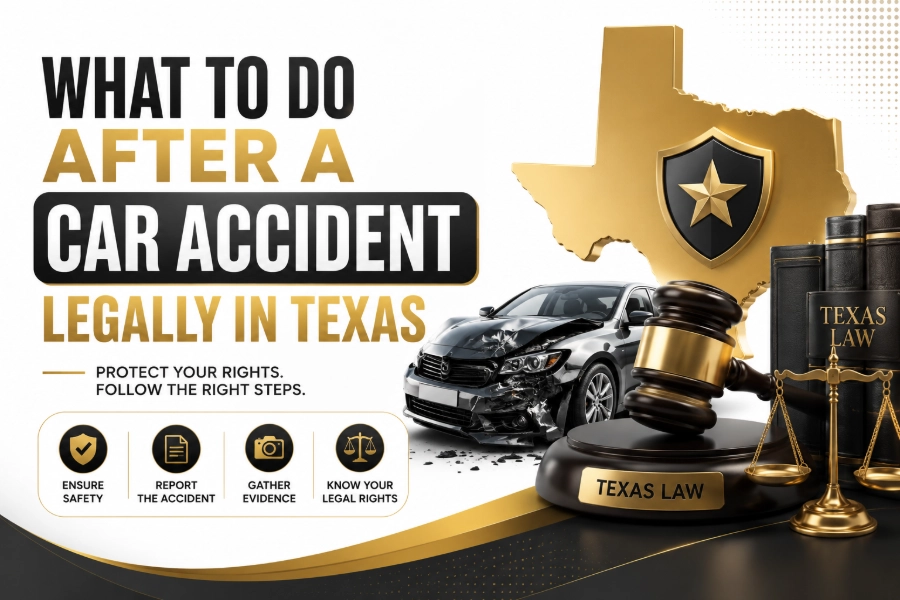
What to do after a car accident legally in Texas starts with safety, proof, and calm decision-making. You need to protect your health, comply with Texas law, document the crash, and avoid making statements that could help an insurer blame you later.
This guide explains the legal steps that matter from the first few minutes through medical care, insurance claims, fault disputes, and deadlines.
What To Do After A Car Accident Legally In Texas Right Away
Stop your vehicle as close to the crash scene as safety allows, turn on your hazard lights, and check yourself and others for injuries. An expert like an injury lawyer Macon can show you how injury-focused legal help is often organized around crash victims, and that context reminds you to preserve facts early instead of trying to solve fault at the roadside. If the cars can move, get them out of active traffic, call 911 when needed, and never leave the scene unless emergency medical care requires it.
Must-know Tip: Treat the scene like a legal record, not a debate. Your job is to stay safe, cooperate with police, and collect accurate information before memories fade. Do not argue, accuse, or apologize, because even polite comments can be repeated later as fault admissions.
When Should You Call Police After A Texas Crash?
Call police if the crash involves injury, death, suspected intoxication, a hit-and-run, an uninsured driver, blocked traffic, or damage that appears serious. Texas crash reporting now focuses on officer-investigated CR-3 reports, and the old CR-2 driver “Blue Form” is no longer retained by TxDOT. Ask for the officer’s name, badge number, agency, and report number because the report can help insurers compare stories and citations.
What Information Should You Exchange?
Exchange names, phone numbers, addresses, driver’s license numbers, license plates, insurance company names, policy numbers, and vehicle details. Photograph the insurance card and driver’s license only when the other person allows it, and write the information down if they object. Get witness names before they leave because neutral observations can matter later.
How Should You Document Evidence At The Scene?
Take wide photos first, then medium and close-up photos. Capture vehicle positions, lane markings, signs, skid marks, debris, weather, lighting, injuries, airbags, seat belts, and damage from several angles. Record short videos if they show traffic flow, signal timing, construction zones, unsafe road conditions, nearby cameras, or dashcams.
Keep towing receipts, repair estimates, rental records, medical bills, and every insurance letter in one folder. Video can be erased quickly, so note camera locations and ask who handles footage requests. The stronger your evidence file is, the harder it becomes for an insurer to rewrite the crash later.
What Should You Avoid Saying After The Crash?
Do not say “I am sorry,” “I did not see you,” “it was my fault,” or “I am fine” just to calm the moment. You can be polite without giving legal conclusions, because fault depends on evidence, traffic laws, injuries, and sometimes accident reconstruction. Say, “I need to check for injuries,” “here is my insurance information,” and “the officer can document what happened.”
Avoid recorded statements until you understand who is asking, which insurance company they represent, and how the statement may be used. Texas uses proportionate responsibility, so even a small careless phrase can become part of a fault argument. If you must report the crash, stick to basic facts like time, location, vehicles involved, and known injuries.
Why Medical Care Matters Even If You Feel Fine
Get checked the same day if you have pain, dizziness, confusion, neck stiffness, back pain, numbness, chest pain, abdominal pain, vomiting, weakness, or worsening symptoms. Adrenaline can hide injuries, and concussion, spine, or soft-tissue symptoms may build over time. Medical records also connect your injuries to the crash, which helps prevent an insurer from saying you were hurt somewhere else.
Follow the treatment plan and keep prescriptions, referrals, imaging results, work notes, and therapy records. In 2024, Texas recorded 14,905 serious injury crashes, so delayed medical attention is not a small issue. Your health comes first, but your claim also depends on showing that you acted responsibly after symptoms appeared.
Must-know Tip: Never let a claims adjuster decide whether you are injured. Let qualified medical providers examine you, document your condition, and explain the care you need. Keep insurance calls factual and save every written message.
How Texas Fault Rules Affect Your Claim
Texas follows a modified proportionate responsibility rule. You can recover damages only if your share of responsibility is not greater than 50%, and your compensation can be reduced by your percentage of fault. For example, if your damages are $50,000 and you are found 20% responsible, your recovery may be reduced by $10,000.
If you are found 51% responsible, you may recover nothing from the other side. This is why scene photos, witness statements, police reports, repair analysis, and medical records can change the value of a case. Early evidence matters because insurers often look for ways to shift blame.
How To Deal With Insurance Companies
Report the crash to your insurer as soon as reasonably possible, but do not guess about fault or injury severity. Texas minimum liability coverage is commonly described as 30/60/25, meaning $30,000 for injury to one person, $60,000 per accident, and $25,000 for property damage. Those limits may not cover a serious crash, so look for collision, PIP, MedPay, uninsured motorist, underinsured motorist, and rental coverage.
Be careful with quick settlement offers, broad medical authorizations, and forms that release all claims. In 2023, more than one in seven U.S. drivers were uninsured, and Texas insurance data has also warned about millions of vehicles not matched to active insurance. If the other driver has no coverage or insufficient coverage, your own policy may become the primary source of recovery.
What To Do In Special Accident Situations
For a hit-and-run, call police, write down every detail you remember, and look for cameras immediately. For an uninsured driver, get the same information you would in any crash and notify your insurer about possible UM coverage. For a rideshare, delivery, truck, or company vehicle crash, document logos, unit numbers, app screenshots, cargo, and employer details.
Parking lot crashes still need photos, witness information, and insurance reporting. Multi-car crashes require extra care because each insurer may blame another driver. Government vehicle crashes may involve shorter notice rules, so act quickly if a public agency may be involved.
What Deadlines Should You Know In Texas?
Most Texas personal injury cases must be filed within two years, but you should not wait close to the deadline. Evidence disappears, vehicles get repaired, camera footage is deleted, and witnesses move. The legal deadline is the last line, not the best time to start.
Officer crash reports also involve timing because Texas generally allows officers time to submit reports after qualifying crashes. Ask how to obtain the report and check it for wrong names, insurance details, missing witnesses, or incomplete diagrams. If something is inaccurate, keep your own documentation and ask a lawyer how corrections or supplements may work.
Must-know Tip: Deadlines punish delay. Start your claim file early, even if you hope the case settles without a lawsuit. A simple folder with photos, bills, reports, and notes can save your claim later.
How To Protect Property Damage Claims
Take photos before repairs begin and remove personal items if the vehicle is towed. Ask where the vehicle is stored, what fees apply, and whether you can access it to take more photos. Storage fees can grow fast, so communicate with the insurer and towing yard in writing.
Do not accept a total-loss value without reviewing comparable vehicles, mileage, trim, condition, taxes, and recent maintenance. You can usually use your own repair shop, although insurers may recommend preferred shops. Keep repair invoices, rental car records, rideshare receipts, and proof of missed work related to transportation problems.
When Should You Talk To A Lawyer?
Talk to a lawyer when someone is injured, fault is disputed, the other driver is uninsured, the crash involves a commercial vehicle, or the insurer pushes a fast settlement. Legal help can also matter when you face surgery, long-term therapy, lost income, permanent pain, or a claim denial. You do not need to know the full value of the case before asking questions.
A lawyer can preserve evidence, request video, communicate with insurers, review bills, calculate damages, and file before the deadline. In 2025, U.S. traffic deaths were estimated to fall, but serious crashes still created major medical, financial, and legal problems for families. The right legal steps help you avoid turning one crash into years of avoidable stress.
Conclusion
What to do after a car accident legally in Texas comes down to safety, reporting, evidence, medical care, insurance discipline, and deadline awareness. You should stop, check for injuries, call police when needed, exchange information, document everything, avoid fault admissions, and seek medical care even when symptoms seem minor.
You should also understand Texas fault rules, insurance limits, the discontinued CR-2 issue, and the two-year personal injury deadline. A strong claim starts before the first phone call with an adjuster because the scene, photos, witnesses, and medical records shape the outcome. Take each step calmly, keep written records, and get legal guidance when injuries, disputed fault, or insurer pressure make the claim more serious.
FAQs
Do I Have To Call Police After Every Texas Car Accident?
No, but you should call police when there are injuries, death, major damage, blocked traffic, suspected intoxication, or a hit-and-run.
What Should I Do First After A Texas Car Accident?
Check for injuries, move to safety if possible, call 911 when needed, and stay at the scene.
Should I Admit Fault If I Think I Caused The Crash?
No, you should give facts to police and let the evidence, traffic laws, and insurance investigation decide responsibility.
How Long Do I Have To Sue After A Car Accident In Texas?
Most personal injury claims in Texas have a two-year deadline, but some claims may require faster notice.
What If The Other Driver Has No Insurance?
Call police, gather evidence, and notify your own insurer about possible uninsured motorist coverage.
Can I Still Recover Money If I Was Partly At Fault?
Yes, if you are not more than 50% responsible, but your recovery can be reduced by your percentage of fault.
Should I Give A Recorded Statement?
Be careful before giving one, especially to the other driver’s insurer, and do not guess about speed, distance, or injuries.
What Photos Should I Take?
Take photos of vehicles, plates, damage, road signs, lane markings, injuries, skid marks, debris, traffic signals, weather, and nearby cameras.
Do I Need Medical Care If Pain Starts Later?
Yes, delayed pain can still be related to the crash, so get evaluated and explain clearly when the symptoms started.
What Is The Old Texas Blue Form?
The CR-2 “Blue Form” was the old driver crash report, but TxDOT no longer retains or hosts that form.